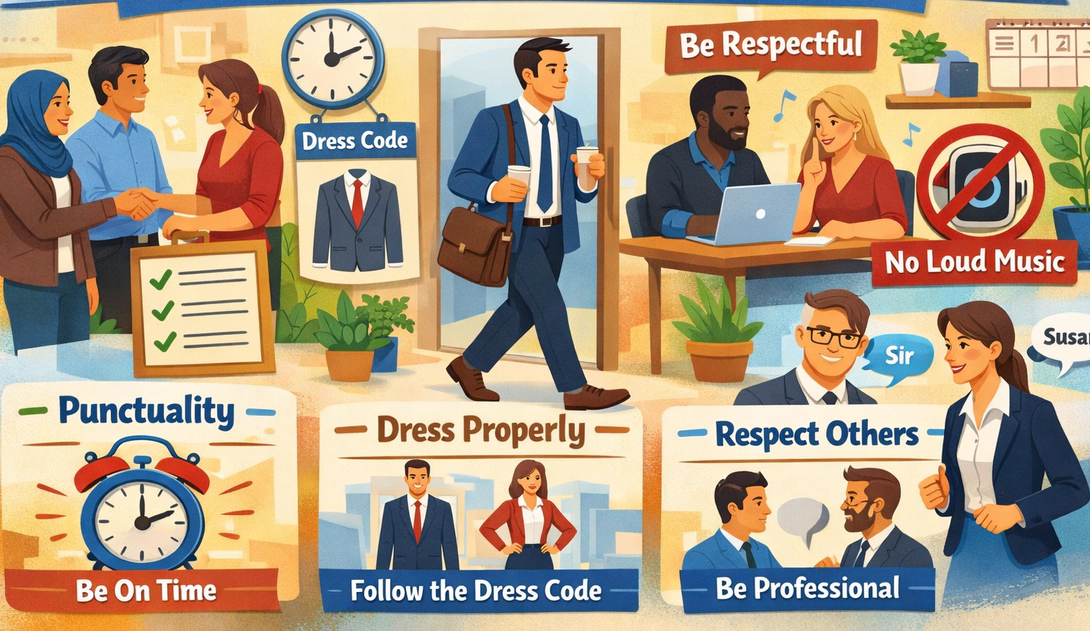
We are all different; our choices, our behavior, and our upbringing have many differences. When we work as a group or work with other coworkers, all these differences are mixed up. But if we don’t set some boundaries or norms, there can be clashes. In the same way, we have to maintain some manners at the workplace, which can be defined as workplace etiquette. This etiquette sets some norms, creates some boundaries, and introduces some common practices that help to build a shared space. For a healthy workplace environment, this etiquette is necessary.
Why is Workplace Etiquette Necessary?
Normally think that you are working in an office where there are no rules, no regulations, or any etiquette. Some people enter the office at 9 AM, some people at 11 AM, some people are comfortable working with high-volume music. Some people talk loudly on speaker mode.
Also, think that your colleagues ask you personal and uncomfortable questions like “When will you get married?” or “When will you have a baby?” How does it sound? Very awkward and very messy.
Yes, when there are no basic manners at the workplace and we don’t practice basic workplace etiquette, the situation becomes horrible.
There are a lot of organizations that don’t follow proper etiquette. That’s why their work environment is not healthy or safe. People don’t feel comfortable working with other coworkers.
People might accept less salary, but they expect a workable, respectful, and peaceful environment. It is more important to find a good work environment than just focusing on money. You can find different types of organizations from different categories on platforms like Crawljobs, but always look for one that values workplace etiquette.
Basic Workplace Etiquette
There are some common practices and norms. If organizations can follow these, they can create a healthier and happier work environment. Let’s discuss some of them:
Addressing
Sometimes freshers are confused about how they should address others. The common practice is to use “sir” or “madam,” especially in Asia. But in Europe or some other countries, they usually call everyone by name, even their supervisors.
Also, the addressing system can vary by organization type. There can be a different mechanism to address colleagues and a different one for customers.
So, when you join a new workplace, try to understand their system of addressing. It reflects respect, equality, and the values of that organization.
Punctuality
This is one of the most valuable parts of workplace etiquette. There are many people who have potential, but they lose their credibility just because of poor time management.
It is very important to maintain office timing, as well as deadlines, submission dates, commitments, and transparency. It helps create a trust-based relationship with supervisors and coworkers.
Punctuality reflects professionalism and builds trust.
Dress Appropriately
There are different dress code practices in different industries, and it also varies from region to region.
Asian countries practice formal dress codes more than European countries. In Europe, people focus more on comfort. In Asia, most formal job sectors still follow a formal dress code.
Besides regional variation, sector-wise also it is different. Government jobs and private formal jobs usually follow a formal dress code. IT and creative sectors may follow semi-formal or casual dress codes. Some sectors follow occupational dress codes like uniforms or safety gear.
So, it is very important to dress appropriately. If you follow a semi-formal dress code in a formal environment, it breaks the workplace etiquette.
And the most important thing is to carry ironed, neat, and clean clothing. Keep in mind that if you wear formal dress, try to match colour combinations. If you are a woman, avoid over makeup or party looks during office hours. Appearance should reflect professionalism.
Health and Hygiene
It is one of the most sensitive parts of manners at the workplace. There are many people who don’t care about self-hygiene, and that creates a negative impact on their personality. It reflects poorly on their coworkers.
Sometimes we don’t realize that bad breath or body odour can create a barrier to communication. Some people don’t use tissues, some don’t maintain a clean desk. It is necessary to keep clean and hygienic items around you, such as your water bottle, socks, working area, and desk.
A neat and clean working area creates a holistic and positive working environment.
Grooming
There are some employees who don’t follow personal grooming. Some come to the office without shaving or trimming their beard. Some don’t use perfume or mouth freshener. Some don’t brush their teeth or trim their nails.
This personal etiquette, when ignored, creates awkward moments for colleagues and peers. Good grooming is part of professionalism.
Basic Manners
There are some basic manners that make a huge difference, such as how you sneeze in public, how you eat, and how you serve others. These small practices show your respect for others and your emotional intelligence.
Professionalism
In any type of organization, professionalism is a valuable asset. It is reflected in your behavior, your words, your steps, and your opinions.
Many employees try to interfere in their coworkers’ personal lives. It is a very negative sign. Asking personal questions or discussing someone’s private matters is not professional. Sometimes jokes or casual conversations cross the line and break professionalism.
Employees should be careful about these things and always maintain professionalism.
Networking Boundary
Sometimes employees get too involved emotionally and mentally with their workplace and coworkers. While friendly relations are good, excessive involvement can break boundaries and lead to problems.
It is important to keep a balance between your personal and professional life.
If your struggles, weaknesses, or personal issues get mixed up with your professional life, it may create consequences.
Sometimes we become so free with colleagues that we lose the seriousness, respect, and accountability that should be there in a professional setting. There must be clear boundaries.
Social Media and Workplace
Now we all are involved in social media. Our personal social activities should remain separate from our workplace.
Sometimes people share personal opinions or memes in official WhatsApp or Facebook groups. Before sharing anything, always think twice. Because knowingly or unknowingly, you carry your organization’s brand with you.
Mobile Etiquette
Ringtone, vibrate, or silent mode these should be properly maintained in office. Choose a professional ringtone or keep your phone in silent mode during meetings or work.
Talking loudly on the phone at the workplace is very awkward and disturbing for others. Always be conscious of your surroundings.
Meeting Etiquette
There are some basic etiquette for joining meetings. If you are the host, send a pre-agenda. If you are attending, read the agenda beforehand. Always carry a notebook or diary to note down important points.
Do not forget to put your phone on silent mode.
If you are attending an online meeting, join at least five minutes earlier. Check your audio, video, background, and internet connection.
These small efforts reflect your dedication and discipline.
How to Practice Workplace Etiquette
Now we know about workplace etiquette, its importance, and some basic practices. But still, many organizations, HR teams, and supervisors struggle to implement it. Let’s explore some ways to make it easier.
Create a Policy
Create a workplace etiquette policy or guideline where every single etiquette and its practices are written clearly. It is important to brief this policy to new joiners.
Also, involve employees, supervisors, and management in developing this policy. When everyone contributes, they feel ownership and responsibility.
Don’t Implement It as Rules
Some HR departments try to implement workplace manners as strict rules. People want freedom; they want to work independently.
So, don’t make it rigid. Try to introduce these as common and respectful practices that everyone can accept willingly.
Reward Policy
From the HR department, there should be a reward system. Employees who regularly practice workplace etiquette can receive recognition like a token gift, award, or “Employee of the Month” badge.
It’s not necessary to offer financial rewards. Recognition itself is powerful.
Arrange Workshops or Trainings
Activity-based practical training can create self-awareness and realisation. These trainings help employees experience real scenarios, understand importance, and practice some actions.
After training, follow-up and monitoring are also important.
Yearly Orientation or Refresher Program
HR can arrange a yearly orientation program for newcomers and refresher programs for existing staff. It helps them remember the policy, practice the basics, and understand its value.
Logistic Support
From the HR or organizational end, they can support with tissues, bins, hygiene kits, air fresheners, and awareness materials. These small things make a big difference in maintaining etiquette.
Video Campaign
Short, fun, educational video campaigns can spread awareness informally. These videos can show real-life scenarios in a humorous way that help employees to relate and adapt easily.
It is tough to practice positive behavior at first, but once we start, it becomes easier.
Workplace etiquette should be practiced at all levels. When management respects workplace manners, when HR emphasizes it during recruitment and training, and when employees are committed to building a respectful environment, the workplace becomes the best place.
Let’s start practicing workplace etiquette today. Let’s create a space where every coworker feels respected, supported, and safe.