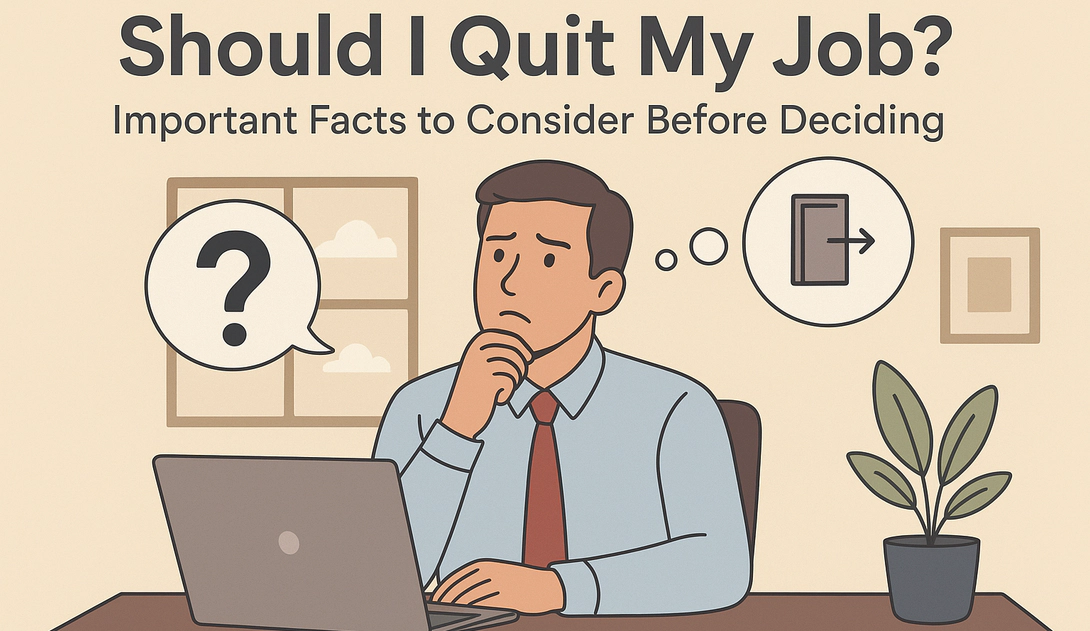
Life is a journey, and in this journey, the professional part is one of the most valuable parts. It is also a long journey. Sometimes there are moments, there are situations, when we have to think, should I quit my job?
Yes, this question is a common question in the professional sector. It is not mandatory that the question arises only in worst situations. In positive situations like better opportunities, this type of thought can also arise. Let’s discuss some situations, some conditions, and some variables which will help us to make the right decision.
Reasons to Resign from a Job
Dissatisfaction
Most employees want to quit their job because of demotivation. Sometimes the office culture, boss behavior, management philosophy, or internal clashes can force someone to quit the job. Most of the time, employees make the decisions out of anger or in the heat of the moment. It is the most common reason to resign a job.
Better Opportunity
This is a positive reason to resign from a job. Mainly, when an employee gets a better opportunity or wants to get a better opportunity, they want to switch job. This opportunity can mean a better position, better salary, or better environment. Sometimes when an employee is in their comfort zone, they think thousands of times, should I quit my job?
There are some highly ambitious employees or people who want to switch their jobs for better growth. So if you want to resign from your job for a better opportunity, you can search different categories of jobs from Crawljobs.
Attaining a Professional Degree
In professional life, there are some opportunities where employees want to grow their potential. That’s why they try to attain a professional degree. Some organizations approve this with or without paid leave during this tenure, but some organizations don’t allow it. So that’s why an employee sometimes has to resign from their job.
Maternity Leave
There are a lot of countries where maternity situations are very complex for women. A lot of countries have no proper implementation of maternity leave. Some organizations have policies, but there are some complex rules and regulations. Suppose if the employee hasn’t passed the probationary time, she couldn’t take maternity leave. That’s why many working women resign from their job.
Career Break
In the long-term career journey, some professionals take a career break. It is also with a specific purpose. During this time, they pause and reflect. Sometimes they take some big preparation in this break. They skill up, take new initiatives, and work with new ideas.
Personal Issues
There are some personal reasons like distance, travel routes, or area shifts. For these reasons, people leave their job or switch their job.
Mental Break
There are some common practices in developed countries. They prioritize their mental health. Sometimes employees take a mental break. That’s why they resign from a job. They take rest. They want a fresh start.
Exploring a New Sector
Nowadays, this idea has become popular. People develop their skills and try to do something on their own. It can be business, entrepreneurship, or idea selling. Sometimes experienced professionals switch their sector to explore more. These are some positive reasons to resign from a job.
Being Fired from a Job
Organizations and offices have some basic cultures and policies. If an employee breaks this policy, the organization handles it very strictly. For some serious issues, organizations fire employees. Sometimes employees are being fired from a job for their own issues. These issues are very serious. Also, it will affect the next job of the employee because the organization doesn’t provide any positive reference. So everyone should be careful regarding these types of sensitive issues.
Things to Consider Before Quitting or Resigning
Don’t Make Decisions When You Are Angry
Most of the time, employees resign from their job out of anger. There could be a lot of situations around you, but remember it is not the best decision to leave the job when you are angry. Try to cool down, try to exercise and meditate. Commit yourself to not making resigning decisions in an angry situation. Think, it is not easy to get a job very quickly. So think about the after-effect. What about your earnings? What about your previous effort? How will you survive?
Don’t Be Emotional
Sometimes you want to leave the organization because the boss shouted at you. Control your emotions. Don’t take important, valuable decisions considering small factors.
Growth Analysis
If you get a better offer, or if you want to focus on growth, you can switch job with a professional process. Create a map: what do you want in your next plan? In which organization or designation can the job align with your growth plan?
Sometimes we get a better salary and just switch the job without checking the portfolio of the organization, future possibilities, or doing a SWOT analysis. That’s why, after two or three months, we become frustrated.
So focus on your goal. Apply for your desired positions. If you get an opportunity, don’t resign from your current job instantly. Research the opportunity and compare it with your future progress in your current organization.
Don’t Resign Because of a Clash with Your Boss
Sometimes all factors are going perfectly, but we cannot match with our supervisor or boss. Our expectations and the supervisor’s behavior don’t align. In this type of situation, a lot of employees quit their job, but they face a similar situation in the future. So, try to solve the root cause. Try to sit with your boss and minimize the misunderstanding. Clear both expectations and set some behavioral norms. It will help you to focus on your growth.
Better Learning
If you have an opportunity to learn better and you believe that this learning will be more helpful for your future growth or career growth, you can leave the job, but with proper procedure.
Better Mentorship
Sometimes luck provides us with some big opportunities. There are some job opportunities that can have very low salaries or unfamiliar organizations. But there can be experienced bosses or leaders whose vision or connections can help you enrich your knowledge. There are some hidden gems who have deep knowledge about the industry, business, and leadership. If you get a chance to learn from them, it’s a very good reason to resign a job.
Toxic Work Culture
There are lots of people who are in the same organization for around 20 to 30 years. And it is very surprising that they haven’t stayed for a handsome salary or benefits. They stay for the company’s work pattern or work culture. That’s why there is a saying: do your job with a low salary but ensure there is a better work culture. Because better work culture gives you a healthy balanced life.
So if you are in a toxic work culture, if there is internal team politics, humiliation, or any other sensitive issues, try to leave the organization as early as possible.
Leave if You Don’t Feel a Connection
Sometimes we get some handsome opportunities. That can be a handsome salary, dream organization, better future opportunities, lots of things. But if you don’t feel a heart connection with the company’s values, products, or services, you cannot shine. Try to work in an organization where you believe in their products, their services, and their values.
Quit Your Job, but Professionally
Sometimes we quit or resign from our jobs in a very unprofessional manner. This is very wrong. It can happen that you leave the organization because they didn’t have any values, any culture, they didn’t respect you, or they forced you to resign. But you have to close it with the proper procedure.
Discuss Properly
Don’t play hide-and-seek games. If you decide to resign, clearly discuss it with your supervisor or the organization’s management. Try to clear your problems and assure them you are resigning with the proper procedure.
Submit Your Resignation Letter
Lots of employees resign verbally or informally. It directly or indirectly creates a negative impact. So you must submit your resignation letter in a professional format.
Meet Proper Deadlines
Every organization has a resignation policy. Provide a proper notice period. It can be one month, two months, or 15 days.
Maintain Proper Handover Procedure
If you’re resigning from a negative situation, don’t show anger or emotion. You must hand over all your documents, responsibilities, and connections in a professional way. It will create your personal image.
Keep Good Relations
Sometimes we close our relations with the organization but not with the colleagues, peers, supervisors, or other staff. Try to keep good relations. They can be your future good networks. They can be your future colleagues.
It is so tough to secure a job, but it is very easy to make the decision to leave an organization. You work hard year after year for your dream job, but sometimes you make resignation decisions within a few seconds. So just pause and reflect. It is so hard to earn something; don’t lose it without a proper strategy or planning. If you want to quit the job, take a pause and think again. Always ask yourself again, should I quit my job now or plan it wisely for a better future?