A resume lists your experience. A cover letter explains why that experience matters for a specific job. Many job seekers underestimate it, yet recruiters still read them, especially for roles that involve communication, leadership, or client interaction. A ResumeLab survey from 2023 found that 83% of hiring managers consider a strong cover letter an important factor when deciding who gets an interview.
Think of the cover letter as the bridge between your resume and the job description. Your resume shows what you did. The cover letter explains how those accomplishments solve the employer’s problems. Done well, it turns a list of bullet points into a compelling professional story.
This guide explains what a cover letter is, why recruiters care about it, how to structure it, and how to avoid common mistakes. You will also see examples and practical advice that work in real hiring situations.
What Is a Cover Letter?
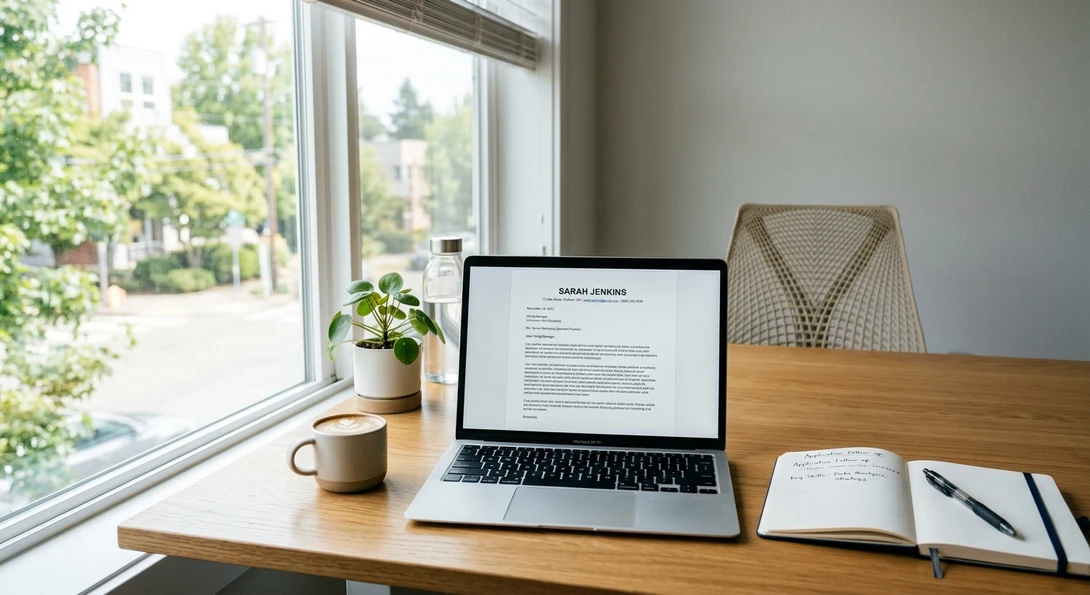
A cover letter is a short document submitted alongside your resume when applying for a job. Most cover letters are one page long, roughly 200 to 400 words, and placed before or attached to the resume in an application.
Its purpose is simple. It provides context, motivation, and explanation that a resume cannot fully show. A resume might say you increased sales by 35%. The cover letter explains how you achieved that result and why those skills are relevant to the new role.
Recruiters often skim resumes quickly. A thoughtful cover letter can slow them down in a good way. It shows professionalism, attention to detail, and genuine interest in the company.
Are Cover Letters Still Necessary?
Many applicants still ask whether cover letters matter in online applications. The short answer is yes, for most professional roles they still matter.
Some companies do skip them. High‑volume hiring or entry‑level roles sometimes rely only on resumes. Yet many recruiters still treat the cover letter as a signal of effort and seriousness. When two candidates have similar resumes, the one who wrote a thoughtful letter often stands out.
A cover letter becomes particularly valuable in situations such as:
- Applying for competitive roles or management positions
- Changing careers or industries
- Explaining gaps in employment
- Applying to smaller companies or startups
- Applying through email rather than an automated system
Even if the employer does not require it, including one shows initiative. Many hiring managers interpret that as professionalism.
Cover Letter vs Resume: What’s the Difference?
People often mix these two documents together, but they serve different roles in the hiring process.
A resume presents structured facts about your career. It includes positions, dates, achievements, and skills. Recruiters often scan it in under 10 seconds during the first review.
A cover letter adds narrative and context. It connects your experience to the employer’s needs and explains why you are interested in that specific position.
In other words:
- The resume shows what you did
- The cover letter explains why it matters for this job
Used together, they form a complete application package. If your resume gets attention, the cover letter can reinforce the recruiter’s decision to invite you for an interview.
How Recruiters Actually Read Cover Letters
Recruiters rarely read cover letters line by line on the first pass. Most spend 10 to 30 seconds scanning them, searching for a few signals.
They usually check:
- The position you are applying for
- One or two relevant achievements
- Skills that match the job description
- Evidence that you researched the company
That short window determines whether they continue to your resume. Long introductions, vague statements, and generic templates quickly lose attention. Clear results and direct language work much better.
The Structure of a Professional Cover Letter
Most effective cover letters follow a simple structure. Recruiters expect a concise document that is easy to scan. In practice, three to four paragraphs work best. Anything longer often loses attention.
A typical structure looks like this:
- Opening paragraph: 2 to 3 sentences introducing the role and your value
- One or two middle paragraphs: evidence of relevant achievements
- Closing paragraph: brief summary and next steps
Keeping paragraphs short improves readability. Recruiters often read cover letters on screens or mobile devices, so dense text blocks are harder to scan.
1. Contact Information
Start with your name, phone number, and email address. Some candidates also include a LinkedIn profile. Double‑check that your email address looks professional and that your phone number is correct.
Many applicants overlook this step. Incorrect or outdated contact information can cost you an interview invitation.
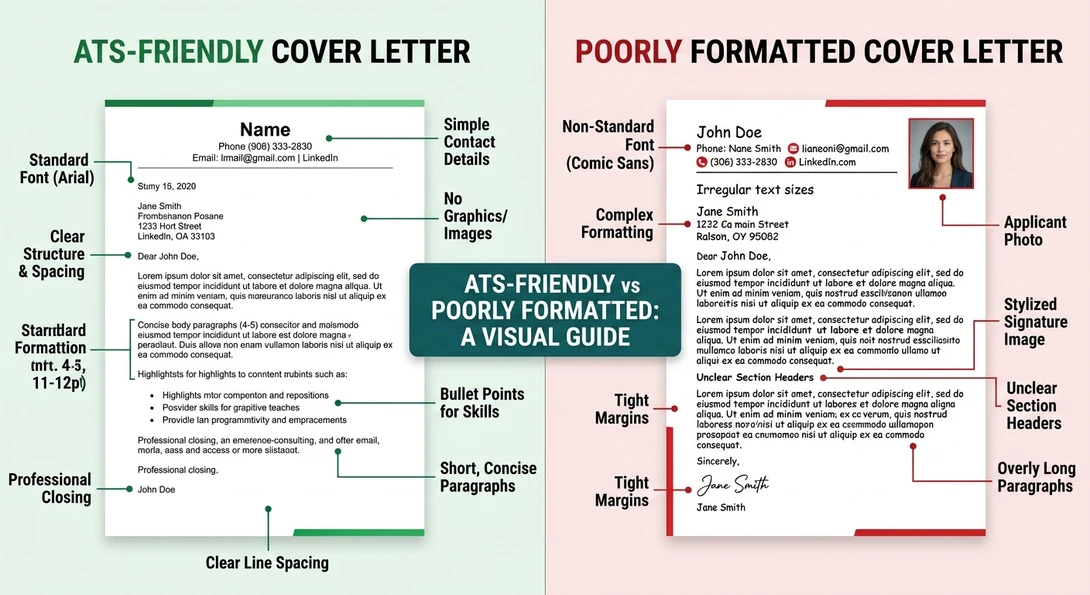
Formatting should match your resume. Use the same font, spacing, and header style so the two documents look like a consistent application package.
2. Greeting
Address the letter to a specific person whenever possible. It signals effort and research.
Common ways to find the hiring manager include:
- Checking the job listing carefully, some companies include the recruiter’s name
- Looking at the company’s team page or leadership section on its website
- Searching LinkedIn for titles such as “Hiring Manager,” “Recruiter,” or the department lead
- Calling the company’s main phone number and politely asking who manages hiring for the role
Once you find the name, use a professional greeting such as Dear Ms. Lopez or Dear Mr. Chen.
If you cannot find the name after reasonable research, use one of these alternatives:
- Dear Hiring Manager
- Dear Marketing Team
- Dear Recruitment Team
Avoid outdated greetings such as To Whom It May Concern or Dear Sir or Madam. They sound impersonal and dated.
3. Opening Paragraph
Your opening should quickly explain what job you are applying for and why you are a strong candidate. Recruiters often decide within seconds whether to continue reading.
A strong opening usually includes:
- The job title
- The job reference number if provided
- Where you found the job posting
- One relevant achievement or qualification
Example:
I am applying for the Digital Marketing Specialist position (Job ID DM‑417) advertised on CrawlJobs.com. Over the past three years I managed paid advertising campaigns that generated more than $2.8M in online revenue while reducing cost per acquisition by 27%.
This approach immediately shows relevance and gives the recruiter a reason to continue reading.
4. Middle Paragraphs
The middle section connects your experience to the employer’s needs. Focus on two or three relevant achievements rather than repeating your entire resume.
One effective approach uses the STAR method, commonly used in interviews but equally useful in cover letters.
- Situation: the context or challenge
- Task: your responsibility
- Action: what you did
- Result: measurable outcome
For example:
At BrightWave Retail our online store struggled with high cart abandonment rates. I led a redesign of the checkout process and introduced targeted remarketing campaigns. Within six months the conversion rate improved by 18% and monthly revenue increased by $240,000.
Recruiters respond well to numbers and concrete outcomes. Avoid vague statements such as “I am a hardworking team player.”
Another important step is aligning your experience with the keywords used in the job description. Many companies use applicant tracking systems that scan applications for relevant terms such as software tools, certifications, or technical skills.
If the job description highlights project management, analytics, or specific platforms like Salesforce or Tableau, mention those skills naturally in your examples.
5. Demonstrating Alignment With the Company
Strong cover letters show genuine interest in the organization, not just the job title. That requires basic research before writing.
Useful sources include:
- The company’s official website, especially the “About Us” and careers pages
- Recent press releases or product announcements
- LinkedIn posts from company leaders or employees
- Industry news articles or interviews with executives
Look for clues about company culture, priorities, and mission. Mentioning these briefly signals that your application is thoughtful rather than generic.
For example, if a company emphasizes sustainability or innovation, connect that value to your own experience or interests. A single well‑researched sentence can make a strong impression.
6. Closing Paragraph
The final paragraph summarizes your interest and invites the employer to continue the conversation. A good closing feels confident but respectful.
Example:
I would welcome the opportunity to discuss how my campaign management experience could support your marketing team’s upcoming product launches. Thank you for your time and consideration.
After the closing paragraph, include a formal sign‑off. The appropriate phrase depends slightly on the greeting.
- If you addressed the person by name, use Yours sincerely
- If the recipient’s name is unknown, use Yours faithfully
Follow the closing with your full name. Digital signatures are optional but not necessary.
Email vs Attachment Cover Letters
The format of your cover letter may change depending on how you apply for the job.
If you apply through an online system, the cover letter is usually uploaded as a PDF or Word document attachment alongside your resume. In this case, follow the traditional letter format with your contact details and the employer’s information at the top.
When applying directly by email, the cover letter often appears in the email body itself. Keep the message shorter and remove the full header formatting.
A simple email structure works well:
- Short greeting
- One concise paragraph summarizing your interest and experience
- Mention of attached resume
- Professional closing
Always attach your resume unless the employer specifically asks otherwise. Use clear filenames such as John‑Smith‑Resume.pdf and John‑Smith‑Cover‑Letter.pdf.
Discussing Sensitive Topics in a Cover Letter
Applicants sometimes wonder whether to mention disabilities, health conditions, or personal circumstances in a cover letter. In most situations, this information is optional and not required.
Employers are primarily evaluating your qualifications and ability to perform the role. Detailed personal explanations are usually better reserved for later conversations if relevant.
There are a few cases where brief clarification can help, such as explaining a career break or major change in employment history. Keep the explanation short and professional, focusing on readiness to return to work and the skills you bring.
Tailoring Your Cover Letter to Different Situations
Not every cover letter has the same purpose. Candidates often adjust their approach depending on career stage or goals.
Entry‑Level Candidates
Graduates or candidates early in their careers may not have extensive work experience. Instead of focusing on job history, emphasize:
- Academic projects
- Internships
- Volunteer work
- Technical skills learned during education
A strong project result or internship achievement can demonstrate capability just as effectively as full‑time experience.
Career Change Applications
Career transitions require additional explanation. Recruiters need to understand how your previous experience transfers into the new field.
For example, a teacher applying for a corporate training role could highlight communication skills, curriculum development, and presentation experience. The goal is to translate past work into skills relevant to the new industry.
Applying Without a Job Posting
Sometimes candidates contact companies even when no vacancy is advertised. In that case, the cover letter should focus on interest in the company and how your expertise could contribute to their work.
Research the organization before writing. Mentioning the company’s projects, products, or values shows initiative and preparation.
If you are exploring opportunities across multiple industries, reviewing job categories on CrawlJobs.com can help identify roles where your skills are most relevant.
Full Cover Letter Example
Many job seekers find it easier to write their own letter after seeing a complete example. The following model follows the structure described in this guide.
Dear Ms. Lopez,
I am applying for the Operations Manager position (Reference OM‑2241) advertised on CrawlJobs.com. During the past five years I have led logistics and process improvement initiatives that reduced operational costs by 22% while improving delivery times across three regional warehouses.
At NorthGate Distribution I managed a team of 18 staff members responsible for inventory planning and order fulfillment. After identifying recurring shipping delays, I introduced a new routing system and implemented weekly performance reviews with department supervisors. Within nine months on‑time deliveries increased from 82% to 96%.
I am particularly interested in Apex Supply because of your investment in automation and data‑driven logistics. Your recent expansion into European markets aligns closely with my experience managing cross‑border shipping operations and vendor partnerships.
I would welcome the opportunity to discuss how my operational leadership experience could support your continued growth. Thank you for your time and consideration.
Yours sincerely,
Daniel Harper
Common Cover Letter Mistakes
Many cover letters fail because of simple, avoidable errors. Recruiters notice these quickly.
Sending No Cover Letter
Some candidates submit only a resume even when the employer expects both documents. This immediately signals a lack of attention to instructions.
Using the Same Letter Everywhere
A generic letter sent to dozens of companies rarely works. Every job description emphasizes different skills and priorities. Customizing a few sentences for each application makes a big difference.
Copying Templates Without Personalization
Templates can help with structure, but copying text directly from the internet often produces bland, repetitive applications. Recruiters recognize these patterns immediately.
Highlighting Irrelevant Skills
Candidates sometimes list every skill they have. A stronger approach focuses on skills that match the job description. Quality matters more than quantity.
Poor Contact Information
Unprofessional email addresses, outdated phone numbers, or missing contact details create a negative first impression and can prevent recruiters from contacting you.
Ignoring Instructions in the Job Posting
Some employers include specific instructions in job listings to test attention to detail. Candidates who ignore these details risk immediate rejection.
Proofreading and Final Checks
A surprising number of applications fail because of small writing mistakes. Grammar errors, inconsistent formatting, or misspelled company names create a poor impression.
Before sending your cover letter:
- Read the letter aloud to catch awkward phrasing
- Check spelling of the company name and job title
- Run a grammar check using tools such as Word or Grammarly
- Confirm formatting matches your resume
- Save the document as a clean PDF when possible
Even strong candidates lose opportunities because of avoidable errors. Spending five extra minutes reviewing the document is worth it.
Final Thoughts
A well‑written cover letter does not require complicated language or creative formatting. Recruiters value clarity, relevance, and genuine interest in the role.
Treat the cover letter as your personal introduction. It shows motivation, professionalism, and the effort you invested in understanding the company. Combined with a strong resume, it increases your chances of moving from application to interview.
If you want to strengthen your entire application strategy, review additional resources such as how to prepare for a job interview. A few improvements across your job search materials can significantly increase interview invitations.