Most job advice sounds reasonable but produces terrible results. People apply to 200 jobs, hear nothing back, then assume the market is broken. Sometimes it is. Most of the time the problem is the process.
Hiring today runs on filters, algorithms, referrals, and speed. A resume gets scanned by software before a human sees it. Recruiters skim applications for about 6 to 8 seconds. Candidates who run an organized system consistently outperform those who simply apply whenever they feel motivated.
This guide shows how to get a job using a structured workflow. You’ll learn ATS optimization strategies for resumes, automated job search tools, outreach scripts that actually get replies, and a weekly system that keeps applications moving.
Many people asking how to get a job, especially graduates or career changers, struggle with a more specific version of the question: how to get a job with no experience. The answer rarely lies in sending hundreds of random applications. Progress starts with clarity about direction, followed by a system that makes you visible to employers.
The Reality of Modern Hiring
A few numbers explain why job hunting feels difficult.
- The average corporate job receives 200 to 300 applications according to a 2023 Jobvite recruiting report.
- Roughly 75 percent of resumes never reach a human recruiter because an applicant tracking system filters them first.
- Referred candidates are about 4 times more likely to be hired than cold applicants.
- Recruiters typically spend under 10 seconds on their first resume scan.
Those numbers explain why random applications rarely work. The goal is not just volume. The goal is visibility and relevance.
Three levers consistently improve results:
- ATS optimized resumes so your application survives screening.
- Targeted applications instead of mass submissions.
- Direct outreach to people involved in the hiring process.
Many candidates improve only one of these. Strong job seekers combine all three.
Before optimizing resumes or sending outreach messages, one step often gets skipped: choosing a clear career direction. Candidates who apply to everything rarely get traction. Focus dramatically improves results.
Step 1: Choose a Clear Career Direction First
Applying everywhere feels productive but usually wastes time. Recruiters look for candidates who appear intentional about their career path. Even entry level roles benefit from this clarity.
Start by identifying the sector or role you want to enter first, not necessarily the dream job ten years from now. A focused starting point helps you build relevant skills and a coherent resume.
Define Your Career Criteria
Job satisfaction depends on more than the title. Many people rush into applications without thinking about lifestyle or long term direction. That mistake leads to quick burnout or another job search six months later.
Spend time answering a few practical questions before targeting roles:
- What salary range supports your living costs and financial goals.
- Whether you prefer remote, hybrid, or office work.
- Whether you want to move toward leadership or remain a specialist.
- Which industries genuinely interest you.
- What type of work schedule or workload feels sustainable.
Clear answers prevent random applications and help you evaluate offers later.
Research the Industry
Industry research sounds academic, but it is actually practical. Spend a few hours understanding how your target field works.
Look for patterns such as:
- What skills appear repeatedly in job descriptions.
- Which roles are growing fastest.
- Which tools or certifications employers expect.
- How salaries and demand have changed in recent years.
Example: someone targeting the IT sector quickly discovers that demand has shifted toward cloud computing, data analytics, and AI related tools. That insight shapes what courses or projects make sense to pursue.
Reports from organizations like the U.S. Bureau of Labor Statistics or industry publications often reveal where hiring demand is headed. Reading even one or two of these reports can change how you prepare.
Research Companies, Not Just Roles
Two companies hiring for the same role can offer very different work environments. Salary structure, promotion pace, and culture vary widely.
When evaluating employers, consider factors such as:
- Company growth stage. Startup, scale up, or large corporation.
- Work culture and expectations.
- Employee reviews and retention rates.
- Compensation structure and benefits.
This research prevents a common mistake. Many candidates chase brand names while ignoring whether the role actually fits their interests or lifestyle.
Seek Professional Guidance Early
Career planning rarely works in isolation. Conversations with people already doing the job provide insights that job descriptions never show.
Simple ways to gather this information:
- Reach out to professionals on LinkedIn for short informational chats.
- Attend industry webinars or meetups.
- Join professional communities related to your field.
Ten minutes of honest advice from someone in the role often saves months of confusion.
Step 2: Identify and Translate Your Transferable Skills
Career changers and graduates often assume they lack relevant experience. Usually the issue is not lack of skills but how those skills are described.
Transferable skills are abilities that apply across different roles or industries. Hiring managers look for them constantly.
Common transferable skills include:
- Communication and stakeholder coordination.
- Project organization and time management.
- Data analysis or reporting.
- Customer problem solving.
- Process improvement.
A retail supervisor moving into operations might describe their experience this way:
Instead of writing:
“Managed store floor staff.”
Write:
“Supervised a team of 12 employees, scheduled shifts, and tracked daily sales metrics to improve weekly revenue performance.”
The second version communicates leadership, data awareness, and operational coordination. Those skills apply far beyond retail.
Candidates who reframe past experience in this way suddenly qualify for many more roles.
Step 3: Identify the Skills Employers Actually Want
Every job exists to solve business problems. Employers hire people who help improve systems, increase revenue, support customers, or build products. Understanding this context makes applications far stronger.
Start by analyzing multiple job descriptions for similar roles. Patterns appear quickly.
Extract Skills From Real Job Listings
Instead of guessing what skills matter, collect them directly from job ads.
A practical process:
- Open 10 to 15 job postings for your target role.
- Write down every skill or tool mentioned.
- Highlight the ones appearing repeatedly.
For example, a junior data analyst role might repeatedly mention: SQL, Excel, dashboards, and stakeholder communication. That tells you exactly what to prioritize.
Understand the Responsibilities Behind the Skills
Job descriptions list responsibilities that reveal how the role actually functions.
Customer support positions, for instance, are not just about answering calls. They exist to reduce churn, resolve issues quickly, and maintain customer satisfaction. That insight changes how you frame your experience.
Candidates who connect their skills to business outcomes stand out quickly.
Step 4: Build an ATS‑Optimized Resume That Passes Filters
Applicant Tracking Systems scan resumes for structure, keywords, and context. If your resume fails here, the recruiter never sees it. A detailed breakdown appears in our guide on how applicant tracking systems work.
Tailor Your Resume to Each Job Posting
Sending the same resume everywhere dramatically lowers response rates. Small adjustments can double the number of recruiter replies.
Effective tailoring usually takes 5 to 10 minutes:
- Adjust the professional summary to match the role.
- Reorder bullet points so the most relevant experience appears first.
- Add keywords that appear frequently in the job description.
This does not mean rewriting your resume from scratch. It means highlighting the experience that matches the employer’s priorities.
Use Keywords From the Job Description
Recruiters often configure ATS filters using phrases directly from the job description. If the listing says “SQL data analysis” and your resume says “analyzed databases”, the system may not connect them.
A practical process:
- Copy the job description into a document.
- Highlight repeated skills and tools.
- Insert those phrases naturally into your experience bullet points.
Example transformation:
Weak bullet:
“Responsible for marketing analytics and reporting.”
Strong bullet:
“Built weekly marketing dashboards in Google Analytics and SQL, helping the team increase campaign ROI by 18 percent.”
The second version includes tools, metrics, and keywords. ATS systems recognize those immediately.
Use Simple Resume Formatting
Many candidates unknowingly break ATS parsing. Fancy templates cause problems. Columns, icons, and graphics often confuse the system.
Safe formatting rules:
- Use standard section titles like Experience, Skills, Education.
- Avoid tables, text boxes, or graphics.
- Submit resumes in PDF unless the application asks for Word format.
- Use a chronological format rather than creative layouts.
Plain resumes often outperform designer ones. Recruiters care about clarity, not decoration.
Step 5: Build Your LinkedIn Profile and Personal Brand
Recruiters rely heavily on LinkedIn to find candidates. A weak profile makes you invisible, even if your resume is strong.
Profiles that attract recruiter messages usually include several elements:
- A headline that describes your role or specialization.
- A summary explaining what problems you solve professionally.
- Detailed experience with metrics and outcomes.
- Skills aligned with job descriptions in your field.
Activity also matters. Posting insights, commenting on industry topics, or sharing projects signals engagement with your field. Recruiters often check these signals.
Adding media helps even more. Many professionals attach presentations, dashboards, design samples, or GitHub links directly to their profiles. Visible proof of work strengthens credibility.
Step 6: Create an Automated Job Search Workflow
Manual job searching wastes time. The modern approach relies on alerts, aggregators, and automation.
Instead of visiting dozens of sites, set up a pipeline that collects opportunities automatically.
Example workflow used by many successful candidates:
- Set job alerts on LinkedIn, Indeed, and Google Jobs.
- Use an aggregator such as CrawlJobs to scan multiple job boards daily.
- Save listings in a tracking spreadsheet or tool like Notion.
- Review alerts once per day instead of constantly browsing.
This reduces search time while increasing coverage. New postings get attention quickly, which matters because early applicants often receive more visibility.
Understand the Main Job Discovery Channels
Opportunities come from several sources, not just job boards. Strong candidates use multiple channels simultaneously.
Common sources include:
- Job boards such as LinkedIn Jobs, Indeed, and aggregators like CrawlJobs.
- Company career pages.
- Recruiting agencies or staffing firms.
- Employee referrals and networking.
Staffing agencies often fill roles before they appear publicly. Building relationships with recruiters can uncover hidden opportunities.
Step 7: Track Your Applications Like a Sales Pipeline
Job searching works surprisingly well when treated like sales. Each application becomes a lead that moves through stages.
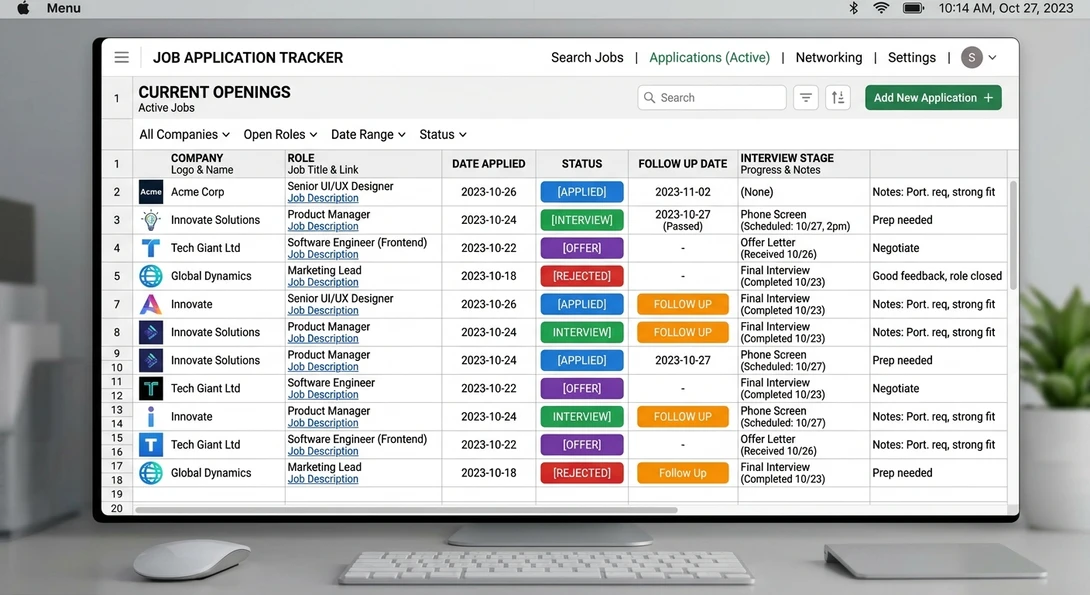
A simple job search tracker might include:
- Company name
- Role title
- Application date
- Contact person or recruiter
- Current status
- Follow up date
Real numbers from job search data:
- Typical response rate from cold applications: 3 to 5 percent.
- With referrals or outreach: 15 to 25 percent.
- Average applications before one interview: 15 to 20.
Tracking allows you to see patterns. If 50 applications produce zero responses, the resume or targeting needs adjustment.
Step 8: Send Cold Outreach Messages That Recruiters Actually Answer
Direct outreach dramatically increases interview chances. Most candidates never try it. That leaves less competition for those who do.
Good outreach is short, respectful, and specific. Avoid generic networking messages.
Example message to a hiring manager:
Subject: Quick question about the Product Analyst role
Hi Sarah,
I recently applied for the Product Analyst position at BrightTech. Your team’s work on subscription analytics caught my attention, especially the churn reduction project mentioned in the job description.
I spent the last two years building SQL dashboards for SaaS retention analysis at DataLoop. Thought it might be relevant to what your team is doing.
If you’re open to it, I would appreciate 10 minutes to ask a couple of questions about the role.
Thanks,
Daniel
This approach works because it shows research and relevance. It does not beg for a job.
Recruiters often respond when they see alignment between your background and their hiring needs.
Step 9: Prepare Strategically for Interviews
Many candidates focus heavily on applications but underestimate interview preparation. Strong preparation dramatically improves offer rates.
Most hiring processes follow a similar structure:
- Recruiter screening call.
- Hiring manager interview.
- Technical, case study, or practical assessment.
- Final team or executive interview.
Preparation should include several steps:
- Research the company’s business model and recent news.
- Practice explaining your achievements using the STAR method.
- Prepare examples of solving problems, leading projects, or improving results.
- Prepare thoughtful questions about the role and team.
Interviewers often remember candidates who clearly explain impact. Numbers, outcomes, and lessons learned make stories far more convincing.
Step 10: Build a Portfolio or Public Proof of Work
A portfolio dramatically improves credibility, especially in technical or creative roles.
Developers often use GitHub. Designers prefer Behance or personal sites. Analysts share dashboards or case studies.
Strong portfolio examples include:
- A marketing analyst sharing campaign experiments and results.
- A software developer publishing open source tools.
- A product manager writing breakdowns of product features.
These projects can also appear directly on LinkedIn profiles or resumes as media links. Hiring managers trust visible work more than resume claims.
Step 11: Invest in Continuous Learning and Certifications
Many industries evolve quickly. Candidates who show continuous learning signal motivation and adaptability.
Popular options include:
- Short professional certifications.
- Online courses from platforms like Coursera or Udemy.
- Industry recognized credentials such as AWS, Google Analytics, or PMP.
- Workshops or bootcamps tied to specific tools.
Even one recent certification can strengthen a resume if it directly relates to the role. It also gives you stronger talking points during interviews.
Step 12: A Weekly Job Search System That Produces Results
Consistency matters more than intensity. Many candidates apply aggressively for a few days, then stop. A structured weekly system works better.
Example schedule used by many successful job seekers:
Monday:
- Review job alerts and save relevant listings.
- Research companies.
Tuesday and Wednesday:
- Submit 5 to 8 targeted applications.
- Customize resume keywords for each role.
Thursday:
- Send outreach messages to recruiters or employees.
- Follow up on previous applications.
Friday:
- Prepare for interviews or practice answers.
- Update the application tracker.
This structure produces around 20 to 30 quality applications per month. With average response rates, that often leads to several interviews.
Real Example: How One Candidate Landed a Job in 6 Weeks
A marketing analyst named Kevin shared his job search data publicly in 2024. The results were revealing.
His process looked like this:
- 42 targeted applications.
- 18 outreach messages to recruiters.
- 9 recruiter responses.
- 5 interviews.
- 2 final round interviews.
- 1 job offer.
Kevin reported that two things made the biggest difference: tailored resumes and direct outreach. Generic applications produced almost zero responses.
Common Mistakes That Cause Applications to Fail
Many job seekers unknowingly sabotage their chances. These problems appear frequently in recruiting audits.
- Applying to hundreds of jobs with the same resume.
- Ignoring networking or referrals.
- Writing vague resume bullet points without metrics.
- Applying days or weeks after the job posting.
- Not tracking applications or follow ups.
Small improvements in these areas dramatically increase interview rates.
The Job Search Mindset That Works
Job searching often feels personal. Rejections arrive without explanation. Response rates fluctuate. Even strong candidates experience long stretches of silence.
Treat the process like an experiment. Measure inputs and outputs. Adjust your resume, targeting, and outreach until response rates improve.
Persistence matters. Many successful candidates go through dozens of applications before momentum appears. Rejection is data, not a verdict on your potential.
Candidates who approach the search systematically almost always outperform those relying on luck or volume alone. The difference is rarely talent. It is process.
Anyone asking how to get a job should start there. Build a system, track results, and refine it each week. The interviews follow.