The interview question “What are your weaknesses?” still trips up experienced professionals. Candidates either panic and overshare, or they give the classic fake answer: “I’m a perfectionist.” Hiring managers hear that line every week.
Good interviewers are not trying to embarrass you. They want to learn three things: self‑awareness, honesty, and whether you actively improve your skills. Your answer should show growth, not perfection.
Most online advice stops at giving a list of “safe weaknesses.” That approach only gets you halfway there. The strongest candidates tailor their answer to the job, explain how they’re improving, and keep the response tight enough for a 20‑second explanation.
This guide breaks down exactly how to answer “what are your weaknesses” with a clear framework, role‑specific examples, recruiter commentary, and scripts you can practice before your next interview.
Why Interviewers Ask About Weaknesses
Hiring managers rarely expect a dramatic confession. They want insight into how you handle limitations at work.
Here is what they are actually evaluating.
- Self-awareness. Can you realistically assess your skills?
- Growth mindset. Do you improve weaknesses instead of ignoring them?
- Judgment. Do you understand which weaknesses are safe to mention?
- Communication skills. Can you explain a challenge clearly and briefly?
A hiring manager once told me something blunt: about 70 percent of candidates give an answer that sounds rehearsed or fake. The remaining group shows genuine reflection and improvement. Guess which group gets the offers.
The Psychology Behind This Question
Many candidates struggle with this question for psychological reasons rather than lack of preparation. Interviews trigger stress responses. People worry about rejection, embarrassment, or saying the wrong thing.
Psychologists who study job interviews often describe this as evaluation anxiety. When you know someone is judging your competence, the brain shifts toward self‑protection. That instinct pushes candidates toward safe, generic answers instead of honest reflection.
Social anxiety plays a role too. Admitting a flaw to a stranger feels risky. Candidates sometimes overcompensate with humor, sarcasm, or exaggerated confidence. Those tactics rarely land well with interviewers.
Recognizing this pressure helps you handle the question calmly. Treat it as a discussion about professional growth, not a confession booth. Hiring managers already assume you have weaknesses. They care more about how you manage them.
The 4‑Step Framework for a Strong Weakness Answer
A simple structure keeps your answer honest but professional. Use this formula.
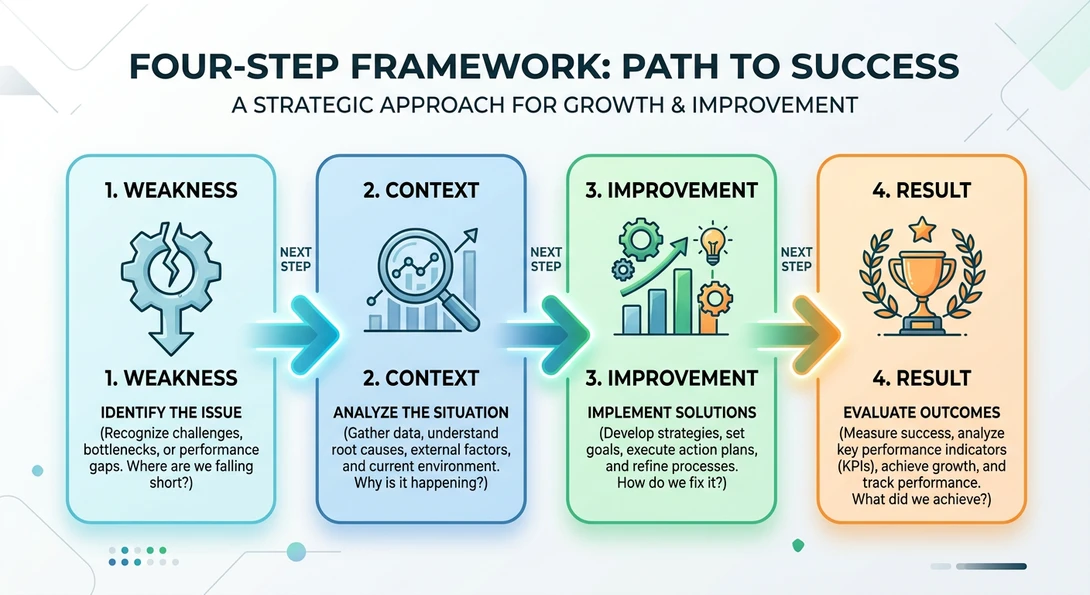
1. State a Real Weakness
Choose something genuine but not essential to the job. Avoid weaknesses that would make hiring you risky.
Example: A project manager admitting they sometimes take on too many tasks before delegating.
2. Provide Brief Context
Show when the weakness appears. Keep it short. Two sentences is enough.
Example: “Earlier in my career I liked handling too many details personally.”
3. Explain What You’re Doing to Improve
This is the most important part. Interviewers want evidence that you take action.
Mention tools, training, feedback, or habits you developed.
4. Share the Result
End with progress. Not perfection. Just improvement.
Example: “My team now runs weekly sprint check‑ins, and delegation has improved project delivery times.”
Put together, this framework produces a natural answer that lasts about 20 to 30 seconds.
Reflective Exercises to Identify Your Real Weakness
Many people struggle because they genuinely do not know what weakness to choose. A short self‑assessment exercise helps uncover one quickly.
Ask yourself these questions before your interview preparation session.
- What type of task do you consistently postpone or avoid?
- What feedback from managers or coworkers appears repeatedly?
- Which work situations create the most stress for you?
- Where do colleagues often help or step in?
- Which skill did you actively try to improve in the past year?
Patterns usually appear quickly. Maybe you avoid presenting to executives, delay difficult conversations with clients, or spend too long polishing small details. Each of these can become a credible interview answer if you show improvement.
Entry‑Level vs Senior Candidate Strategies
Your career stage changes how you should approach this question.
Entry-Level Candidates
Early‑career candidates rarely have long work histories. Recruiters expect learning curves.
Good weaknesses often include skill development or confidence gaps.
Examples:
- Limited experience presenting to large groups
- Struggling with time estimation on complex assignments
- Nervousness speaking up in meetings
Strong entry‑level answer example:
“I used to hesitate speaking up in large meetings early in my internship. I worried my ideas might not be fully formed. Over the last year I started preparing notes before team discussions and asking at least one question each meeting. My manager noticed the change and now asks me to summarize findings during project updates.”
Senior Candidates
Experienced professionals should focus on leadership or process improvements. Basic skill gaps can sound suspicious at this stage.
Examples that work well for senior roles:
- Delegation challenges
- Taking too long evaluating strategic decisions
- Overinvolvement in execution instead of leadership
Senior‑level example:
“I tend to get deeply involved in execution because I enjoy problem solving. A few years ago that slowed my leadership focus. I started blocking weekly strategy time and pushing more technical ownership to senior team members. The team became more independent and delivery speed improved across two product releases.”
Unconventional Weaknesses That Can Work in Interviews
Some weaknesses fall outside typical workplace skills but still affect performance. Mentioning them can sound more authentic than rehearsed answers.
Examples include:
- Discomfort with networking events
- Sensitivity to rejection in sales or outreach roles
- Hesitation initiating cold outreach to new contacts
- Difficulty promoting your own achievements
A marketing professional might say:
“Networking events used to drain me because I’m naturally more analytical than social. I started setting small goals for each event, like meeting three new people and following up the next day. After six months those conversations generated two partnerships and a guest webinar opportunity.”
Answers like this feel believable because they reflect real workplace behavior rather than textbook weaknesses.
Role‑Specific Weakness Examples
Generic answers are forgettable. Smart candidates tailor weaknesses to their profession. Below are examples across common job categories.
Software Engineering
Safe weaknesses:
- Over‑engineering solutions early in a project
- Spending too long optimizing code prematurely
- Hesitation asking for help early in complex debugging
Example answer:
“I used to spend too much time optimizing code before confirming whether the performance improvement mattered. My team introduced a rule: profile first, optimize second. Now I rely on metrics before making optimization changes.”
Marketing
Safe weaknesses:
- Relying too heavily on creative instincts rather than data
- Difficulty prioritizing campaigns when many channels compete
- Spending too long perfecting messaging before launching tests
Example answer:
“I started my marketing career focused heavily on creative ideas. Over time I realized my campaigns improved when data led the decisions. I completed a Google Analytics certification and now build dashboards before launching campaigns.”
Customer Service
Safe weaknesses:
- Taking difficult customer complaints too personally
- Spending too long trying to solve issues alone
- Struggling with call time efficiency early in the role
Example answer:
“Early in my support role I sometimes took negative customer feedback personally. I worked with a supervisor who helped me focus on solving the problem rather than absorbing the emotion. My resolution rate improved and my average handle time dropped by about 18 percent.”
Sales
Safe weaknesses:
- Talking too much during early discovery calls
- Spending excessive time customizing proposals
- Hesitation asking for the close earlier in a deal
Example answer:
“I used to over‑explain product features in discovery calls. After reviewing recordings with a manager, I started focusing on open‑ended questions instead. My close rate increased about 12 percent because prospects did more of the talking.”
A Long‑Form Example With Measurable Results
Short answers are good for interviews, but seeing a complete example helps understand the structure.
Consider this response from a product manager.
“I used to struggle with delegating product research tasks because I enjoyed digging into the data myself. During our 2022 product launch that habit created a bottleneck. My manager pointed out that junior analysts were ready to take more ownership. I started assigning structured research briefs and scheduling short review checkpoints instead of doing everything personally. Within two quarters our research turnaround time dropped from about 10 days to 4 days, and two analysts were promoted after taking on larger projects.”
Notice what makes this answer strong. It includes context, feedback from others, measurable results, and recognition of team development.
Bad Answers and Why They Fail
Some answers practically guarantee a rejection. Recruiters see them constantly.
1. The Fake Strength
“I’m a perfectionist.”
Interviewers recognize this instantly. It sounds scripted and dishonest.
2. A Job‑Critical Weakness
Example: A data analyst saying they struggle with numbers.
That creates risk for the employer. They will likely move on.
3. No Improvement Story
Example: “I struggle with time management.”
Without showing progress, the interviewer assumes the problem still exists.
4. Oversharing Personal Issues
Avoid discussing deeply personal challenges unrelated to work. Keep the conversation professional.
5. Jokes or Deflection
Occasionally candidates try humor. For example: “My biggest weakness is chocolate cake.”
That might work in casual conversation, but interviews are not comedy sets. Recruiters usually interpret jokes as avoidance.
Tone and Delivery Matter More Than You Think
A solid answer can still fail if the delivery sounds defensive or nervous. Interviewers notice tone, pacing, and confidence.
Good delivery includes:
- Calm tone and steady pacing
- Clear ownership of the weakness
- Focus on improvement rather than excuses
- Natural storytelling rather than memorized lines
Practice saying your answer out loud several times. Recording yourself on your phone helps identify filler words and awkward phrasing.
Interview Preparation Tips for High‑Pressure Situations
Even strong candidates struggle when nerves spike during interviews. Preparation reduces that pressure dramatically.
A few practical strategies help:
- Practice answers with a friend or mentor
- Write bullet points rather than memorizing scripts
- Pause briefly before answering difficult questions
- Keep responses between 20 and 40 seconds
Breathing slowly before answering also helps reset your pacing. Many experienced interviewers appreciate a thoughtful pause more than a rushed response.
Using the Question to Evaluate Job Fit
This question can work both ways. Candidates sometimes mention a task they dislike to gauge how central it is to the role.
Example:
“A challenge I’ve worked on is balancing detailed reporting with strategic work. I’ve improved my reporting efficiency, but I perform best when most of my time goes toward analysis and planning.”
If the interviewer responds by saying reporting dominates the role, you just learned something valuable about the job.
You can also follow up with a question.
“Are there areas where new hires typically need extra development or support?”
That question often reveals how the company handles training and growth.
Real Hiring Manager Perspective
Hiring managers usually listen for three signals when candidates discuss weaknesses.
- Honest self‑awareness
- Evidence of improvement
- Professional maturity when discussing mistakes
One director at a mid‑size tech company explained it simply:
“The best answers feel reflective rather than rehearsed. I’m less interested in the weakness itself and more interested in whether the candidate took responsibility and improved.”
That mindset appears consistently across hiring teams. Growth matters more than perfection.
15-30 Second Weakness Answer Scripts
Memorizing a flexible structure helps during interviews. Keep answers short and natural.
Script template:
- Identify the weakness
- Explain the context briefly
- Show the action you took to improve
- End with progress or results
Example script:
“One area I’ve been improving is delegating tasks. Earlier in my career I tried to handle too much myself. I started using structured project tracking and assigning ownership earlier in projects. That shift helped the team move faster and improved accountability.”
Follow‑Up Questions Interviewers May Ask
Your weakness answer often triggers additional questions. Prepare for these.
- What steps are you taking to improve this?
- When did you first notice this weakness?
- How has it affected your work previously?
- What feedback have you received from managers?
Strong preparation for these questions builds confidence across your entire interview. Pair this with guidance in how to prepare for a job interview.
A Simple Template to Build Your Own Answer
Use this quick worksheet before interviews.
Write one real professional weakness.
Describe when it appears in your work.
List two things you did to improve it.
Add one measurable or observable result.
Practice the response until it sounds conversational, not memorized. Recording yourself helps catch awkward phrasing.
Final Thoughts
A thoughtful weakness answer shows maturity. Nobody expects perfect candidates. They expect professionals who learn from mistakes and keep improving.
The best responses are honest, concise, and backed by action. Focus less on choosing the “perfect” weakness and more on explaining how you grew from it. That mindset impresses interviewers far more than a rehearsed line.